

Key Takeaways
- Heavy brush pressure can wear enamel and irritate your gums.
- Bleeding gums, tooth sensitivity, and frayed bristles can signal too much pressure.
- A soft toothbrush and light grip can help protect your smile.
- Ongoing symptoms need a dental check.
You finish your daily brush and notice sore gums or a sharp feeling when you drink cold water. Our team at Dow’s Lake Dental in Ottawa’s Little Italy can help you find out whether blood in the sink comes from your brushing technique or another oral health issue. These changes may happen even when you clean your teeth twice each day.
You may be brushing too hard if your gums bleed or pull back, your teeth feel sensitive, or your toothbrush bristles fray within a few weeks.
What Too Much Brush Pressure Does to Your Smile
Using more pressure doesn’t necessarily remove more plaque. Plaque is a soft, sticky film, so gentle contact and steady movement can help remove it. Hard scrubbing can harm the areas you want to protect.
- Heavy pressure can wear down enamel, the hard outer layer of your teeth.
- Repeated scrubbing can leave your gums red, sore, or swollen.
- Enamel wear and gum changes can expose sensitive parts of your teeth.
You may then feel a quick sting from ice water, hot soup, sweet foods, or even cool air.
Signs Your Teeth & Gums Need Gentler Care
Changes Near Your Gumline
Your gumline may show early signs of heavy pressure. Watch for changes that continue after several days.
- Your gums look red, sore, or puffy.
- Your gums bleed when you brush.
- Your gumline starts to pull back from your teeth.
Gums can also bleed because of plaque or gum disease. A dentist can check the cause and help you adjust your home care.
Changes to Your Teeth & Toothbrush
Heavy pressure can change how your teeth look and feel. Your toothbrush can also offer a clue.
- Your teeth react to hot, cold, sweet, or sour foods.
- Your teeth look longer near the gumline.
- You notice small grooves close to your gums.
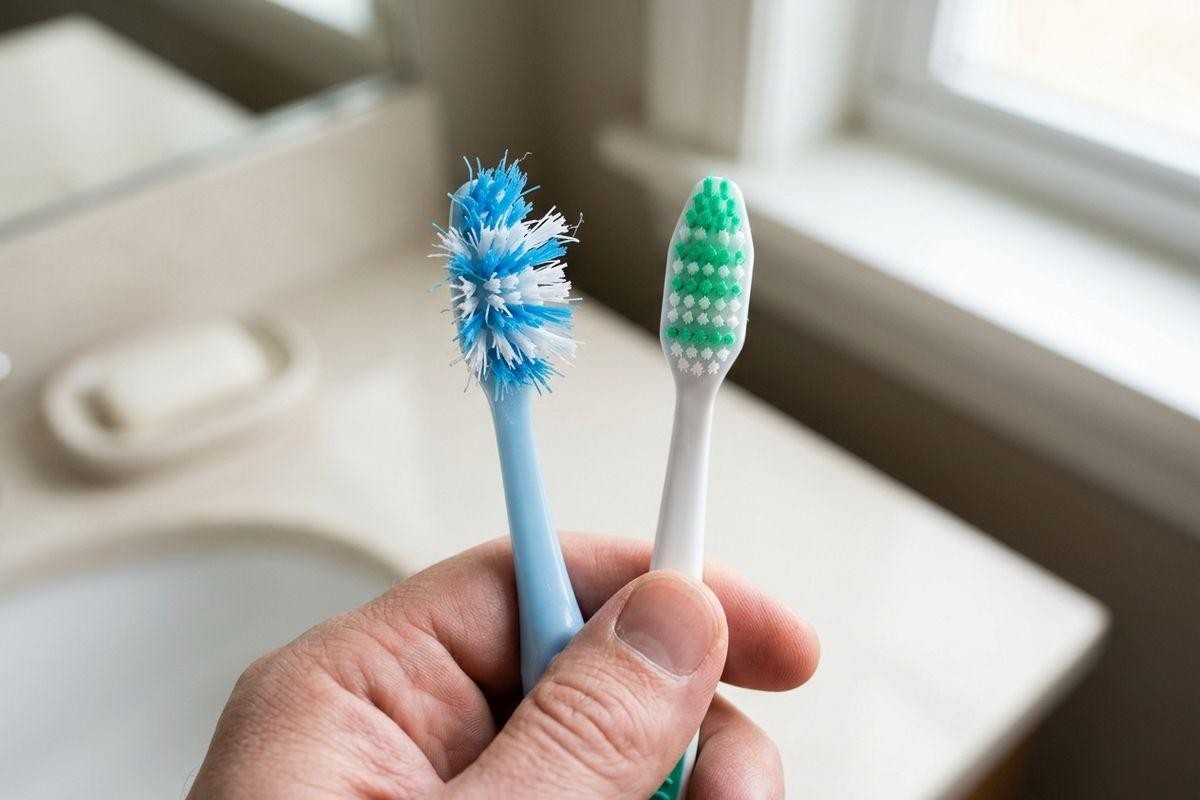
- Your toothbrush bristles bend, spread, or fray quickly.
A brush that looks worn after a few weeks often means your grip is too tight.
How to Brush Your Teeth With Less Pressure
Your Brush & Grip
A few small changes to your toothbrush and grip can help you use less pressure.
- Choose a soft toothbrush that fits comfortably in your mouth.
- Hold it like a pencil instead of wrapping your whole hand around the handle.
- Keep your fingers and wrist relaxed as you brush.
- Place the brush at a slight angle toward your gumline, and avoid bending the bristles sharply.
An electric toothbrush with a pressure sensor can alert you when you press too hard.
Your Daily Brush Routine
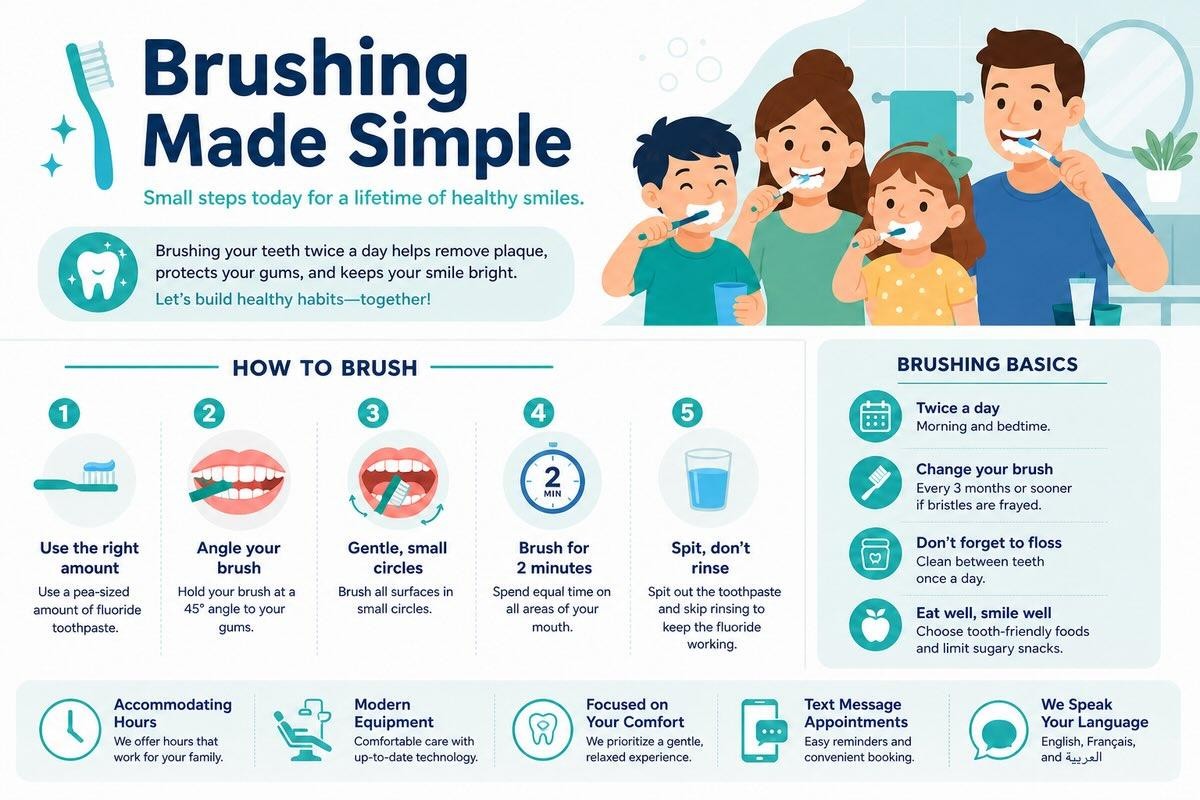
Move the brush in small circles across each tooth. Spend two minutes brushing the front, back, and chewing surfaces. Use fluoride toothpaste twice a day, and replace your brush every three months or sooner when the bristles fray.
Gentle, steady contact can clean your teeth without the rough back and forth motion that irritates gums.
How to Help Your Child Brush Gently
Children may scrub hard because they want to finish quickly. Show your child how to hold the handle with a light grip and move the brush in small circles. A child-size toothbrush with soft bristles can reach small teeth without crowding the mouth.
- Brush beside your child so they can copy your movements.
- Watch the bristles and reduce pressure if they bend.
- Use a two-minute song or timer to set the pace.
Check your child’s brush each month. Fast bristle wear can show that your child needs more guidance with pressure.
When to Visit a Dentist in Ottawa
Reasons to Book a Checkup
Book a dental visit when gum bleeding lasts longer than one week, sensitivity affects meals, or your gums continue to pull back. The dentist can look for enamel wear, gum irritation, cavities, and other possible causes.
Your Dental Check & Next Steps
The team can watch your brush technique and suggest a toothbrush, grip, and routine suited to your family. Early care can help manage sensitivity and reduce further wear.
Dow’s Lake Dental offers accommodating hours, tools like digital radiographs and LED lighting, text message appointments, and service in English, French, and Arabic. Walk-ins are welcome. Contact Dow’s Lake Dental to book your visit and get practical help with gentler daily care.
