


Key Takeaways
- A tongue scraper removes some bacteria, food debris, and dead cells from your tongue’s surface.
- Daily use can help your breath feel fresher and reduce visible tongue coating.
- Light pressure helps protect your tongue from soreness.
- Tongue care supports brushing, flossing, and regular dental exams.
A white or yellow coating can collect on your tongue after meals or overnight, and you may also notice a stale taste or breath that doesn’t feel fresh after you brush your teeth.
Our team at Dow’s Lake Dental explains that a tongue scraper gently lifts some bacteria, food debris, and dead cells from the surface of your tongue. It adds a quick step to your oral care routine, but it doesn’t replace your toothbrush, floss, or visits with your dental team.
What a Tongue Scraper Does for Your Mouth
Your tongue has tiny bumps and grooves that can trap food particles, dead cells, and bacteria. This mixture may form a visible coating, especially near the back of your tongue.
A tongue scraper has a smooth, curved edge that passes across this surface. As you pull it forward, it collects some of the material caught between the small bumps. Rinsing the scraper washes that material away instead of moving it around your mouth.
This gentle surface cleaning can support your full routine. You still need to brush your teeth twice a day with fluoride toothpaste and clean between your teeth each day. These steps help remove plaque from areas a tongue scraper can’t reach.
Tongue Scraper Benefits & Limits
You may notice a few changes after you scrape your tongue.
- Your breath may feel fresher after your routine.
- Your tongue may have less visible coating.
- Your mouth may feel cleaner after meals or sleep.
However, a scraper doesn’t address every cause of bad breath. Dry mouth, tooth decay, gum concerns, certain foods, and other health issues can affect how your breath smells. Scraping harder won’t solve these problems and may leave your tongue sore.
Your scraper complements your toothbrush, floss, and dental exams. Your dental team can check areas of your mouth that you can’t easily see at home.
How to Use a Tongue Scraper
Use your scraper after you brush or at another convenient point in your routine. Stand near the sink so you can rinse it between passes.
- Stick out your tongue and place the scraper near the back, stopping before you feel a strong gag response.
- Pull the scraper toward the tip with light, even pressure.
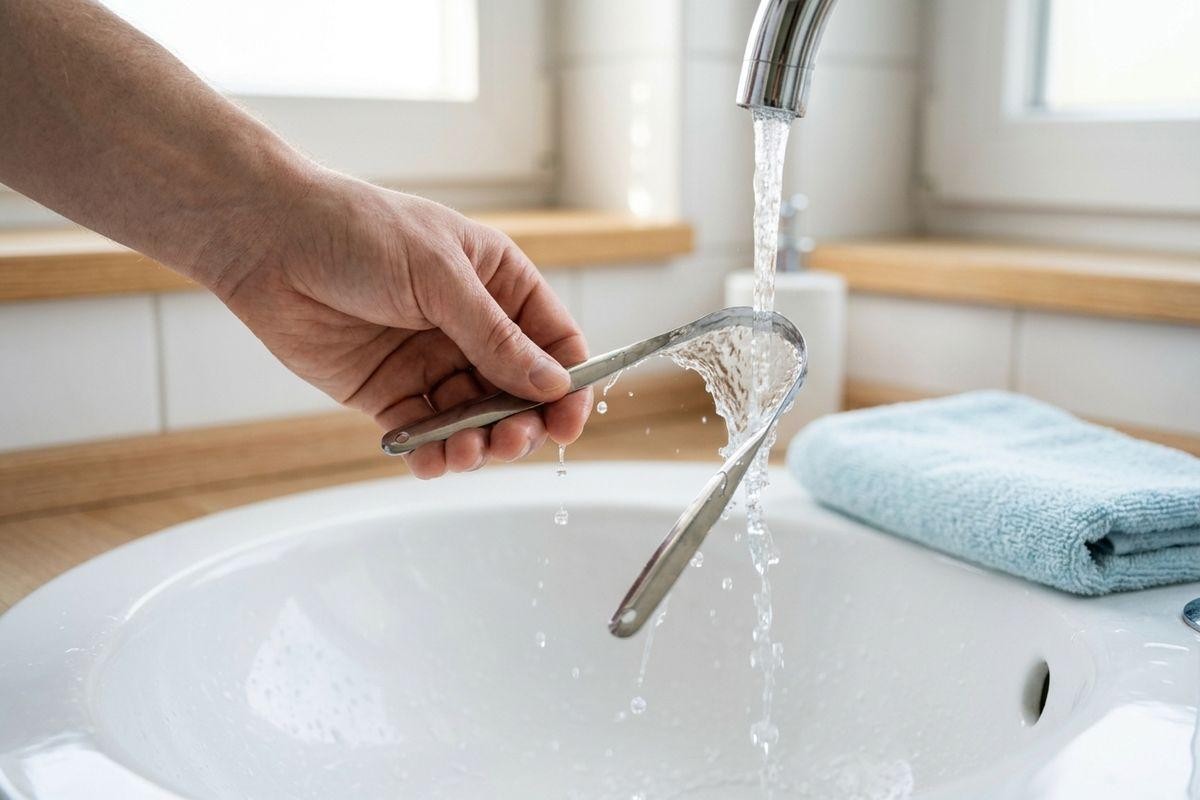
- Rinse the scraper under clean water after each pass.
- Repeat once or twice without pressing hard.
- Wash the scraper and let it air dry before you store it.
Your tongue shouldn’t bleed or hurt. If you notice discomfort, use less pressure or pause until the area feels comfortable again. Follow the care directions provided with your scraper, since cleaning needs can vary by material.
How Often Your Family Can Use a Tongue Scraper
One gentle session each day may be enough for you. Adding it to your morning or evening routine can help you remember the step without scraping too often.
Children need close supervision and an age-appropriate scraper. Show your child how to keep the tool near the front at first and use very light pressure. Stop if your child feels pain or has trouble with the motion. Use the same gentle approach across the family, and supervise children closely.
- Give each family member a separate scraper.
- Clean every scraper after each use.
- Store scrapers where they can dry between uses.
- Replace a scraper if it develops rough or damaged edges.
When to See Your Dentist
Signs for Your Visit
Changes in your tongue can sometimes need more than home care. Book a dental visit if you notice any of these signs.
- Bad breath that lasts despite daily brushing, flossing, and tongue care.
- New soreness, swelling, or colour changes.
- White, red, dark, or smooth patches that don’t fade.
- Bleeding that happens with gentle pressure.
- Your child has pain or trouble with gentle tongue care.
Support for Your Family
Dow’s Lake Dental can help you review your tongue care and full oral health routine. Our team offers service in English, French, and Arabic, along with modern equipment for detailed oral health checks.
Flexible hours, welcoming walk-ins, and text message appointments can make dental care easier to fit into your family’s schedule. Contact Dow’s Lake Dental to arrange a dental visit and get practical guidance for a cleaner, healthier-feeling mouth.
